From Champions to Champion Teams - Your Maxme Masterclass Highlights
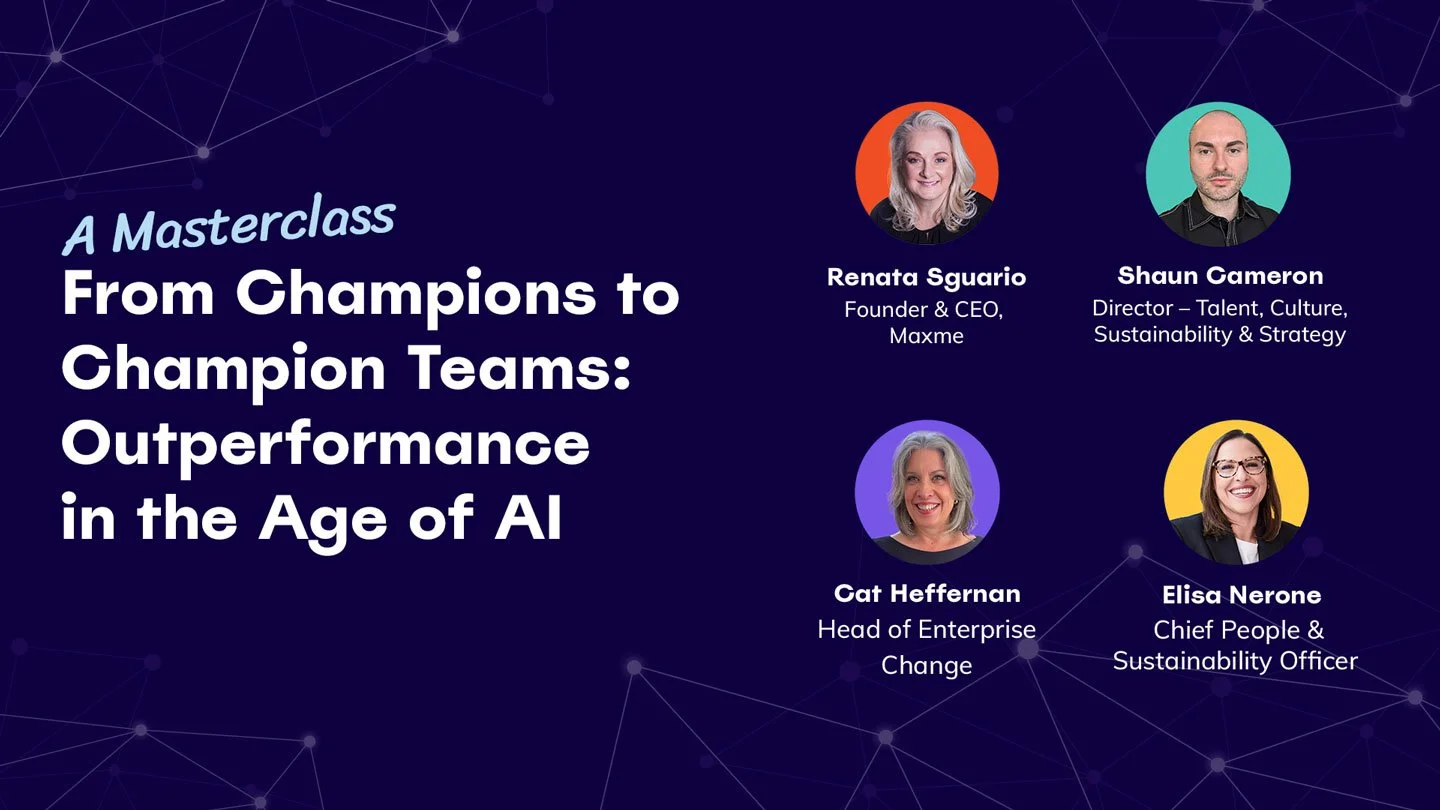
As part of our recent Maxme Masterclass, From Champions to Champion Teams, we brought together industry leaders to unpack what it really takes for teams to perform in the age of AI and constant change.
From Champions to Champion Teams
High-performing organisations are built on teams, not individuals. The conversation explored what actually enables teams to perform consistently over time, especially in a workplace shaped by rapid change and AI.
A clear theme emerged early: while individual capability still matters, it is how people come together that ultimately drives results.
What High-Performing Teams Look Like
Sustained performance doesn’t happen by chance. It is driven by a few consistent characteristics:
Synergy: teams recognise that collective output is stronger than individual effort
End-to-end thinking: the customer experience is delivered across teams, not within silos
Shared resilience: people support each other through pressure and change
Efficiency: teams understand each other’s strengths and derailers
What stood out is that these aren’t technical capabilities. They are human dynamics that need to be actively built and maintained.
AI Is Raising the Bar
The discussion highlighted a “split screen” reality when it comes to AI.
On one side, there are individuals moving quickly, experimenting and finding efficiency gains. On the other, there are those who are cautious, unsure, or even anxious about what it means for their role.
This divide is creating uneven capability across teams. At the same time, expectations are shifting. It is no longer enough to simply deliver good work. Increasingly, work needs to be fast, thoughtful, and grounded in strong judgement.
Human Skills Are the Constant
As the technical landscape continues to evolve, the skills that remain relevant are deeply human.
Curiosity
Critical thinking
Empathy
Communication
Collaboration
Resilience
These are the capabilities that allow individuals to navigate ambiguity, work effectively with others, and adapt as roles and expectations change. They are also the foundation of strong team performance.
Team Cohesion Is the Real Differentiator
In times of change, it is easy for individuals to become inwardly focused, thinking about their own role, capability, or job security.
This is where team culture becomes critical.
High-performing teams are underpinned by:
Psychological safety, where people feel comfortable speaking up and challenging ideas
Belonging, where individuals feel part of something bigger than themselves
Supportive environments, where different levels of capability and confidence are acknowledged
Without these elements, cohesion breaks down and performance quickly follows.
Moving Beyond Individual Performance
A strong theme throughout the discussion was the shift away from individual “heroics”.
The nature of work is changing. The problems teams are solving are more complex, less predictable, and require multiple perspectives. As a result, performance is increasingly collective.
However, many organisations still measure success at an individual level. This creates tension, as people are expected to collaborate, but rewarded for individual output. Closing this gap is critical to building truly high-performing teams.
Why Change Is Not Straightforward
Even when new ways of working offer better outcomes, they are not always embraced.
People often resist change not because they lack capability, but because of what they feel they might lose:
familiarity and routine
a sense of expertise
identity tied to previous ways of working
Without bringing people into the change process and supporting that transition, even well-intentioned transformation efforts can stall.
Champion Teams Start with Individuals
The idea of “champion teams” versus “teams of champions” was a central point of discussion.
Strong individuals matter, but they are not enough on their own. What makes the difference is how those individuals come together around a shared goal.
High-performing teams are made up of people who:
understand their role
play to their strengths
contribute to the collective outcome
Not everyone needs to be a standout performer. But everyone needs to be developed and able to contribute at their highest level.
The Key Role of Self-Awareness
One of the most important, and often missing, capabilities is self-awareness.
It shapes how individuals:
understand their strengths and limitations
recognise their impact on others
take accountability within a team
Without self-awareness, collaboration becomes difficult. With it, teams operate with greater clarity, trust, and effectiveness.
Final Reflections
High performance doesn’t just happen. It requires deliberate effort.
It takes time, energy, and a willingness to listen, adapt, and support one another. It also requires organisations to invest not just in leaders, but in every individual.
In an environment defined by constant change, the ability for people to come together, navigate uncertainty, and perform as a team is what ultimately sets organisations apart.
Check out the full video on demand here: https://youtu.be/dr-eBpmiRyY
More human goodness you might like: