Your Organisation Is Full of Talented People. So Why Isn’t Your Team Outperforming?
The science of what separates high-performing teams from groups of high performers - and what leaders can do about it.
Here’s something I’ve observed across three decades of leading teams, transforming businesses, and now running Maxme: most organisations don’t have a talent problem. They have a team problem.
Walk into any boardroom in Australia and you’ll find accomplished, credentialed, individually impressive people. MBAs, technical specialists, experienced operators. And yet, the team they form together is often significantly less than the sum of its parts. Projects are pulled together at a glacial pace. Communication is fractured. Decisions get relitigated in hallways. Sound familiar?
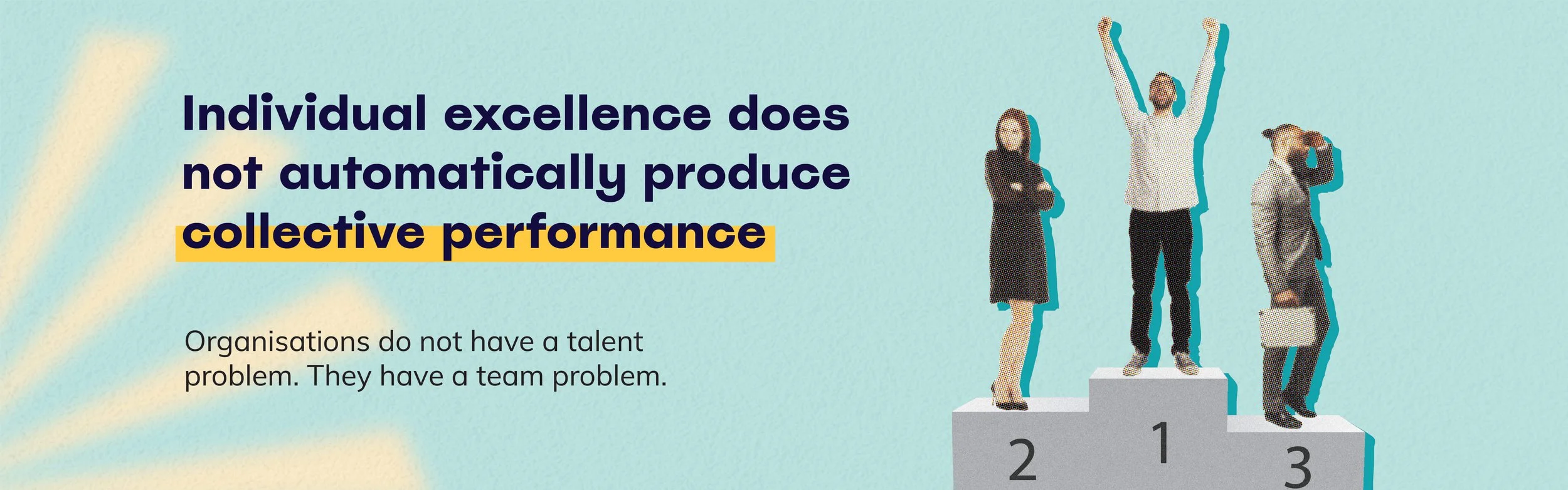
The uncomfortable truth is that individual excellence does not automatically produce collective performance. You can stack a roster with stars and still lose the match. The research is unambiguous on this point, and if you’re a CEO, COO, or team leader trying to understand why your talented people aren’t delivering the results you expected, this is where the answer begins.
The Data Doesn’t Lie: It’s Not Who’s on the Team. It’s How They Work Together.
Google’s now-famous Project Aristotle studied over 180 teams across two years to answer a deceptively simple question: what makes some teams consistently outperform others? The researchers expected the answer would come down to composition — the right mix of seniority, education, and technical skill. They were wrong.
The single most important factor was not who was on the team, but how the team worked together. And at the very top of the list? Psychological safety — the shared belief that team members can take interpersonal risks, speak up, admit mistakes, and challenge ideas without fear of embarrassment or punishment.
Teams with high psychological safety were measurably more productive, more innovative, and had significantly lower turnover rates. They set higher standards and met them, because trust enabled accountability rather than undermining it.
The Transformation Paradox: Billions Spent, Results Still Missing
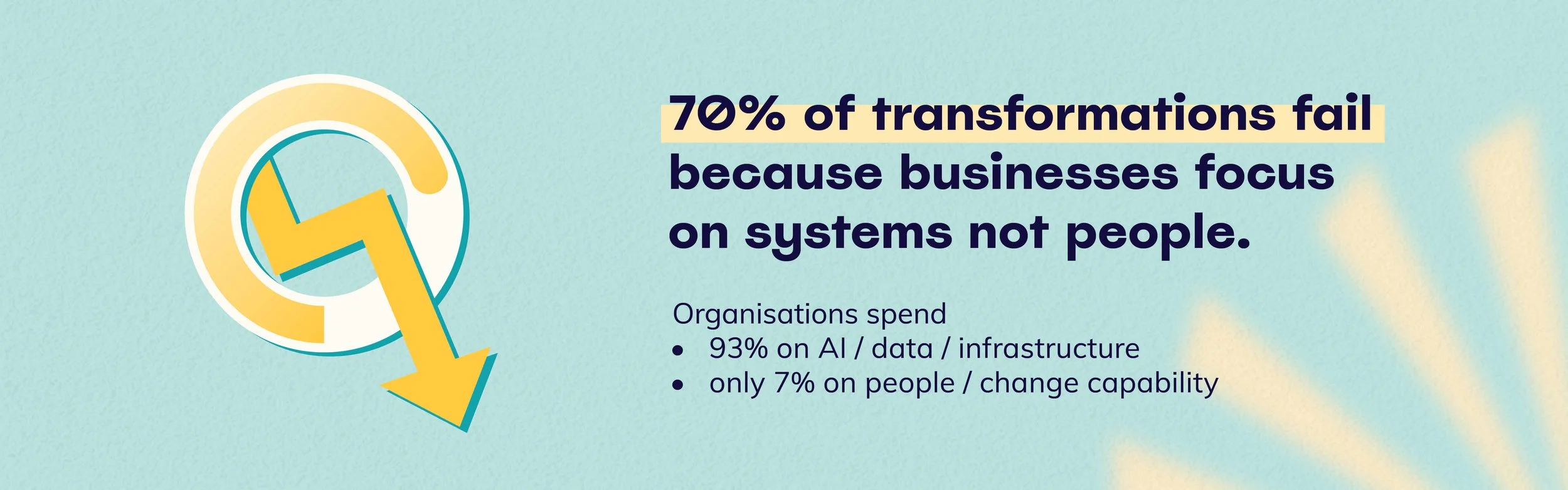
Consider this: McKinsey’s research consistently shows that roughly 70% of all organisational transformations fail to achieve their objectives. Seventy percent.
And the root causes aren’t technical. They’re human. McKinsey identifies insufficient engagement, failure to build capabilities across the organisation, and an inability to craft a compelling narrative that convinces people to change. In other words: communication, trust, adaptability, and leadership — human skills.
Meanwhile, organisations that invest in cultural change alongside their transformation efforts achieve dramatically better results. Research suggests they see up to 5.3x higher success rates than those focused solely on technology or process.
Organisations continually invest in new systems, new structures and new strategies, but they don’t invest in the human capabilities that are the engine.
Deloitte Access Economics projects that two-thirds of all jobs will be human-skill intensive by 2030, while a recent Deloitte survey of 100 CXOs found that most organisations are still devoting 93% of their AI-related spending to data, technology, and infrastructure, and just 7% to the people dimension — redesigning work, training, change management, and reimagining roles.
It’s no longer a human skills ‘gap,there's a chasm between what the evidence tells us matters and where organisations are actually putting their training dollars.
What Outperforming Teams Actually Look Like in Practice
So if it’s not about stacking talent, what does a genuinely high-performing team look like? In our experience — and the research backs this up — it comes down to a handful of observable, developable human capabilities:
1. They’ve built psychological safety — and they maintain it deliberately
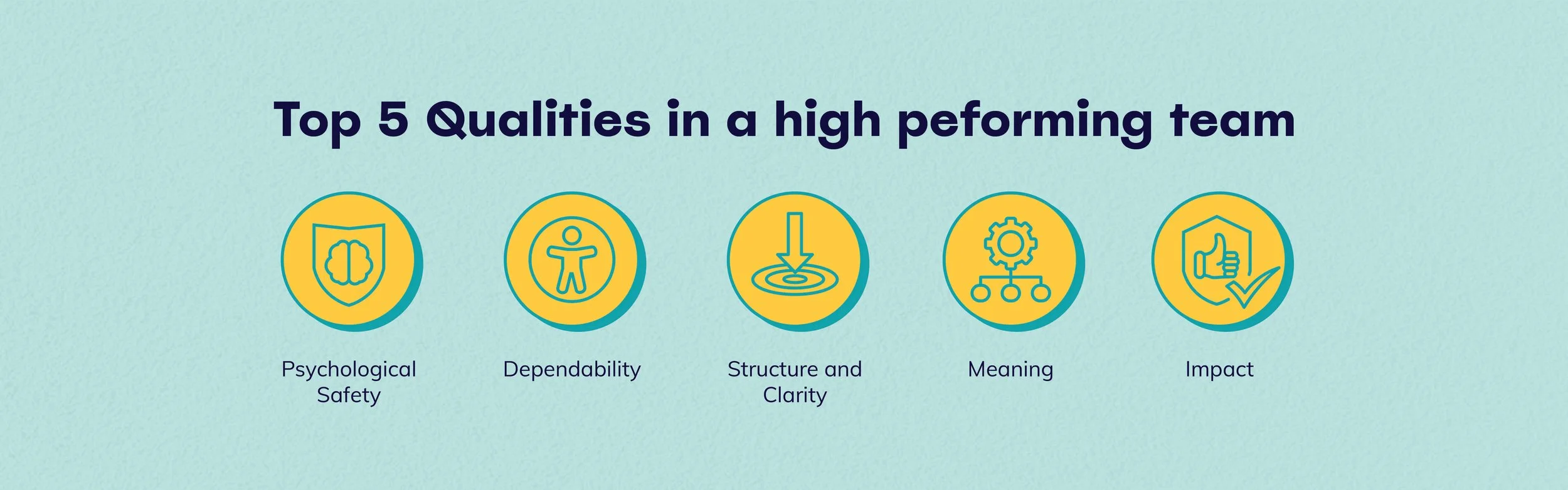
Psychological safety isn’t a “nice-to-have.” It’s the foundation upon which every other team dynamic sits. Google’s research made this unequivocal: of the five key dynamics they identified — psychological safety, dependability, structure and clarity, meaning, and impact — psychological safety was the one that enabled all the others. Without it, people self-censor. They manage impressions instead of solving problems, and the team’s collective intelligence drops below that of any individual member.
Source: The Fearless Organization Scan, “Project Aristotle Explained,” fearlessorganizationscan.com
2. They lead with self-awareness, not just self-confidence
The best teams we’ve worked with — at Telstra, at NAB, at Latitude, and now through Maxme’s programs across dozens of organisations — are led by people who understand their own strengths and de-railers. They know what they bring to the room and what they don’t. That self-awareness is contagious. It gives others permission to be honest about their own capabilities and gaps, which is how teams actually learn and improve.
3. They communicate with precision, not just frequency
Outperforming teams don’t just talk more. They communicate. They’ve learned how to deliver constructive feedback and have the language for productive conflict — the kind that improves ideas rather than eroding relationships. This is a learnable skill, and most people have simply never been taught it.
4. They harness diversity as a performance multiplier
Diversity of thought, background, and experience only becomes an advantage when the team has the skills to leverage it. Without those skills, diversity creates friction rather than innovation. High-performing teams know how to unlock the strengths of every member, turning what could be a point of tension into a genuine competitive edge.
5. They build sustained behaviour change, not just enthusiasm
You can run an energising offsite and see a spike in engagement, but if nothing changes in how people actually interact week to week, that spike is just a blip. The organisations that build outperforming teams invest in ongoing capability development — not one-off events.
In the Age of AI, Human Skills are the amplifier.
If you’re thinking this sounds important but not urgent, consider the AI dimension.
Every task that can be automated, will be. The work that remains — the work that creates the most value — is the work that requires distinctly human capabilities: creative problem-solving, complex communication, ethical judgment, collaborative innovation, and the ability to lead others through ambiguity and change.
Deloitte’s 2025 research on scaling the human edge has evidenced companies that prioritise human-machine collaboration through redesigned roles, processes, and operating models are significantly more likely to realise measurable returns on AI compared to those taking a technology-first approach.
The Real Question for Leaders
If you’re a CEO or COO reading this, the question isn’t whether your organisation has talented people. It almost certainly does. The question is whether those talented people have been equipped to work together at the level required to deliver the outcomes you need.
Have they been given the tools to build trust? To communicate through complexity? To hold each other accountable with respect? To lead through change rather than merely surviving it?
If the answer is no — or “not enough” — that’s not a reflection of their individual capability. It’s a reflection of what the organisation has prioritised. And it’s something that can change.
Success isn’t about IQ. It’s about unlocking what makes us truly human.
CONTINUE THE CONVERSATION
From Champions to Champion Teams: Outperformance in the Age of AI
Maxme Masterclass | Thursday 30 April 2026 | 12.30pm – 1.30pm AEST
If this article has you rethinking what’s really holding your teams back, I’d love you to join us for a candid, no-fluff conversation with three leaders who are doing this work in practice.
I’ll be joined by Shaun Cameron (Director of Talent, Culture, Sustainability & Strategy, Custom Fleet), Cat Heffernan (Head of Enterprise Change, Building & Plumbing Commission), and Elisa Nerone (Chief People & Sustainability Officer, REA Group) for a lunchtime webinar that unpacks what it actually takes to move from a team of high performers to a truly high-performing team.
Together, we’ll explore:
Why individual excellence doesn’t automatically translate into team performance
What high-performing teams actually look like in practice
The human skills that enable trust, alignment, and productive challenge
How leaders can unlock the strengths of diverse teams
Real lessons from building and leading teams through complexity and change
What it takes to create sustained behaviour change, not just short-term improvement
This session is designed for senior leaders, People & Culture professionals, L&D teams, and anyone responsible for building stronger, more aligned teams in a fast-changing environment.
Register now:
maxme.ac-page.com/from-champions-to-champion-teams
Because the gap between a group of talented individuals and a team that truly outperforms? That’s the gap where your competitive advantage lives. And it’s a gap that human skills can close.
—————————————————————————————————————————————————————————————
About the Author
Renata Sguario is the Founder and CEO of Maxme, Australia’s specialist human skills development company. With almost 30 years of experience leading customer-centred, technology-led business transformation at organisations including Telstra, NAB, and Latitude Financial Services, Ren founded Maxme to close the critical gap between technical capability and the human skills that drive sustained performance. Maxme’s programs have upskilled 5,000+ employees and empowered 5,000+ students across Australia, India, and the Philippines.
More human goodness you might like: