The AI Fluency Gap that isn’t on the Org Chart
Remember when Jarvis did everything for Iron Man? Tony still had to know what he was building. We’ve currently got the same problem… It's just a new scenario.
Your team knows how to use AI tools. Great! But do they know how to analyse whether the answers generated by AI tools are correct? Amidst the loud conversations surrounding “AI is going to transform the workplace” and “Everyone needs to become AI fluent”, have we defined what being AI fluent means?
We will answer this eventually, but let’s give you a gentle brain nudge:
What do you think being ‘AI fluent’ means? Is it knowing how to write the perfect prompt, knowing which AI tool to use, getting a meeting summary or something a little less glamorous?
AI literacy has officially become a workplace requirement across departments
Defined as “having the knowledge and skills to understand, use, and think critically about artificial intelligence without needing to know how to code or build models.” Just as traditional literacy allows you read and write, AI literacy lets you navigate a world filled with intelligent systems.
And people are already using it. A lot.
AI is no longer a luxury reserved for billion-dollar companies. Companies globally are implementing it in whatever form they can.
A 2026 ISACA survey found that 78% of professionals now consider AI skills very or extremely important to their jobs, up from 72% the year before. Yet only 33% said their organisation trains all employees on AI.
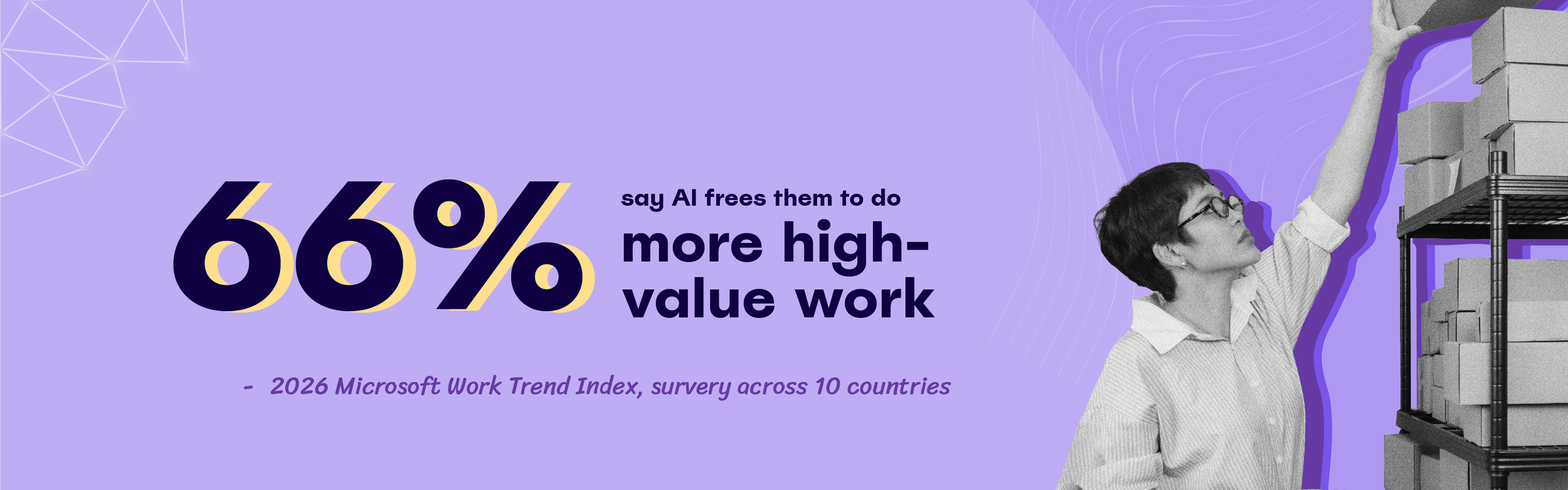
Microsoft's 2026 Work Trend Index surveyed 20,000 AI-using knowledge workers across 10 countries, including India, and found that 66% say AI allows them to spend more time on high-value work.
Even more interestingly, 58% say AI is helping them produce work they couldn't have produced a year ago. That's huge and we are really happy with the strides AI is making in helping the global workforce focus on what really matters.
AI isn't the IT department's monopoly anymore. Every department across organisations is making full use of it, be it for writing, analysing, brainstorming, summarising, researching, or building presentations. It’s basically helping people do things they couldn't do on their own or do in minutes. And this is why AI fluency goes beyond simply knowing how to operate the tool.
Because AI can make you look smarter than you are.
And that's where things get interesting. For a junior employee, preparing a market analysis took 2 days five years ago but today the same thing can be done by AI in two minutes. AI makes everything look hunky dory - the document looks polished, the language sounds confident (which most of us love), there are charts, recommendations, and a beautifully formatted executive summary.
BUT…….
Do they really know what they are presenting?
What if the boss looks at the deck and says:
“Looks great. So which KPIs are we tracking, and how exactly are we going to measure them?”
And there’s a pause. “Umm… let me ask AI.”
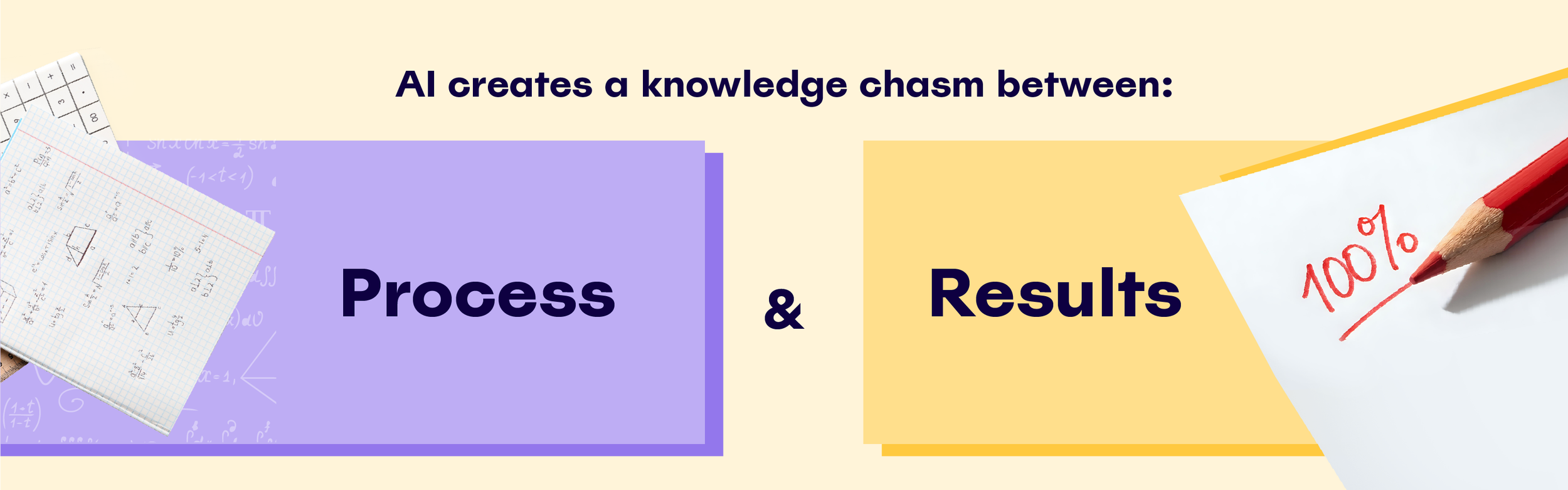
There is a chasm forming in this knowledge gap. Just like high school math, you need to be able to show your workings - or at least understand how you came to the result. Without this, you’re putting forward a deck that falls apart at the first question.
As humans, we have the ability to learn, be curious and think critically. By applying these skills before presenting plans or solutions, we are able to optimize our time, innovate and defend our assumptions (which showed up as our prompts). We can interrogate the deck before your boss does, and enable the best possible outcome.
That’s human to the power of AI.
The new workplace skill isn’t asking AI better questions.
It’s knowing what to do after AI gives you an answer. Because to get an answer, all you need to do is drop a question into the search bar. The difficult part is to hold AI accountable and ask yourself questions like:
Does this actually make sense? Or even judging its genuineness altogether. Honestly, that’s something only a human can do- activating their superpowers just when the time is right, like Critical thinking, Judgement, Curiosity, and knowing your subject well enough to spot when something feels… off.
This isn’t just a nice theory. A 2026 study of 544 GenAI users found that people who trusted AI more were less likely to verify its outputs. The better AI gets at sounding confident, the easier it becomes for us to stop checking whether it’s actually right.
So yes, we need people who know how to use AI but at the same time we also need those who are constantly thinking, pushing back or who are always willing not to call a spade a spade.
The problem isn't that people are using AI too much.
Across organisations, there is one question that is being echoed in halls and meeting rooms: “Rahul, has AI been implemented across all our departments?”
Great question. But are we also asking:
“Rahul, does our workforce know when AI shouldn't be used; Are they verifying important outputs; Do they understand the risks of bias, privacy and inaccurate information?”
AI fluency isn't a software skill.
Or at least, it shouldn't be. It's a combination of technical confidence and human judgement. You need to know how to use the technology, but you also need to know how to: think, question, evaluate, communicate, decide and take responsibility. Because AI can give you an answer, however, what you do with it STILL remains your job!
And this is where the org chart gets interesting.
We have roles for:
AI specialists.
Data scientists.
Technology leaders.
Digital transformation teams.
Automation experts.
But where is the role called:
“Person who knows when the AI is talking nonsense”?
Let us know when you see one.
Because Microsoft has said it out in quite bold fonts (we get it, they don't want us to miss that): “Frontier Professionals refuse to outsource their thinking—they know long-term success means continuing to build human skills and not letting them atrophy.”
So the challenge isn't simply getting people to use AI, but to create an ecosystem where people know how to use it well.
The AI-fluent employee of tomorrow might look a little different.
The AI-fluent employee of tomorrow might not look like someone who knows how to use the maximum AI tools but would be someone who can comfortably work with AI using human thinking. They will know when to challenge, investigate and put the laptop down and have a human conversation.
Because AI is getting remarkably good at producing answers. Which means the premium is shifting to the people who can determine which answers are worth acting on.
So perhaps the question isn't: “Is your team AI fluent?”
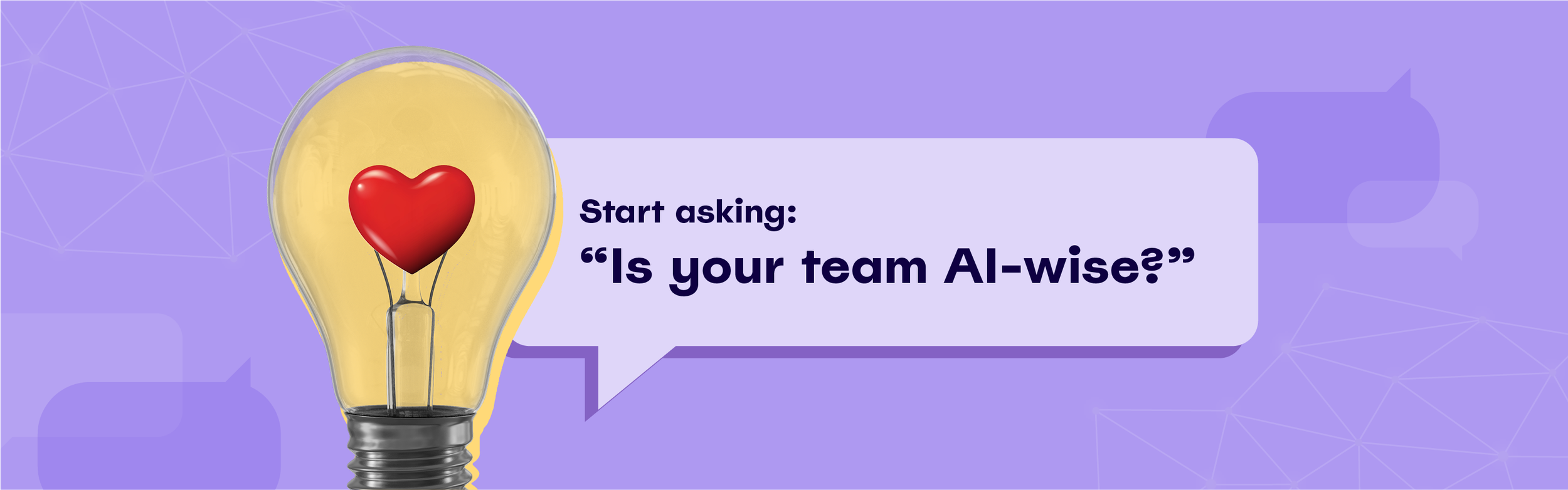
Perhaps it's: “Is your team AI-wise?” One knows how to use the technology without losing the human thinking that makes it useful in the first place.
And that's the gap we at Maxme are interested in.
Because at Maxme, we've never believed that the future is about humans versus technology. The narrative has always been about what happens when better technology meets better-equipped humans.
AI can make the work faster and can even make things possible that weren't possible a year ago. But someone still needs to ask: “Does this make sense?”
We're rather fond of that person.
That's human skill.
Let’s connect
Phone: +91 87007 22340
Email: grow@maxme.com.au
More human goodness you might like: