Icons, and the human skills that made them
We talk a lot at Maxme about leaning into your strengths, and how this builds successful humans. Creativity. Self-awareness. The nerve to connect with people who are nothing like you. It's easy to treat these as abstractions, boxes on a capability framework.
Then someone passes, and the tributes pour in, and you realise the obituaries are really human skills case studies in disguise. Nobody eulogises a person for their KPIs or the pitch deck; they remember how someone made them feel, what they risked, and who they let in.
This year we have sadly lost a striking run of people who each embodied human skills to their very limit, and changed something in the world because of it. We've diving into each of their core VIA Character Strengths - the classification of 24 strengths that sits underneath a lot of human skills work. If you’re looking for yours, download our Hodie app, and do the quiz.
Let’s dive in.
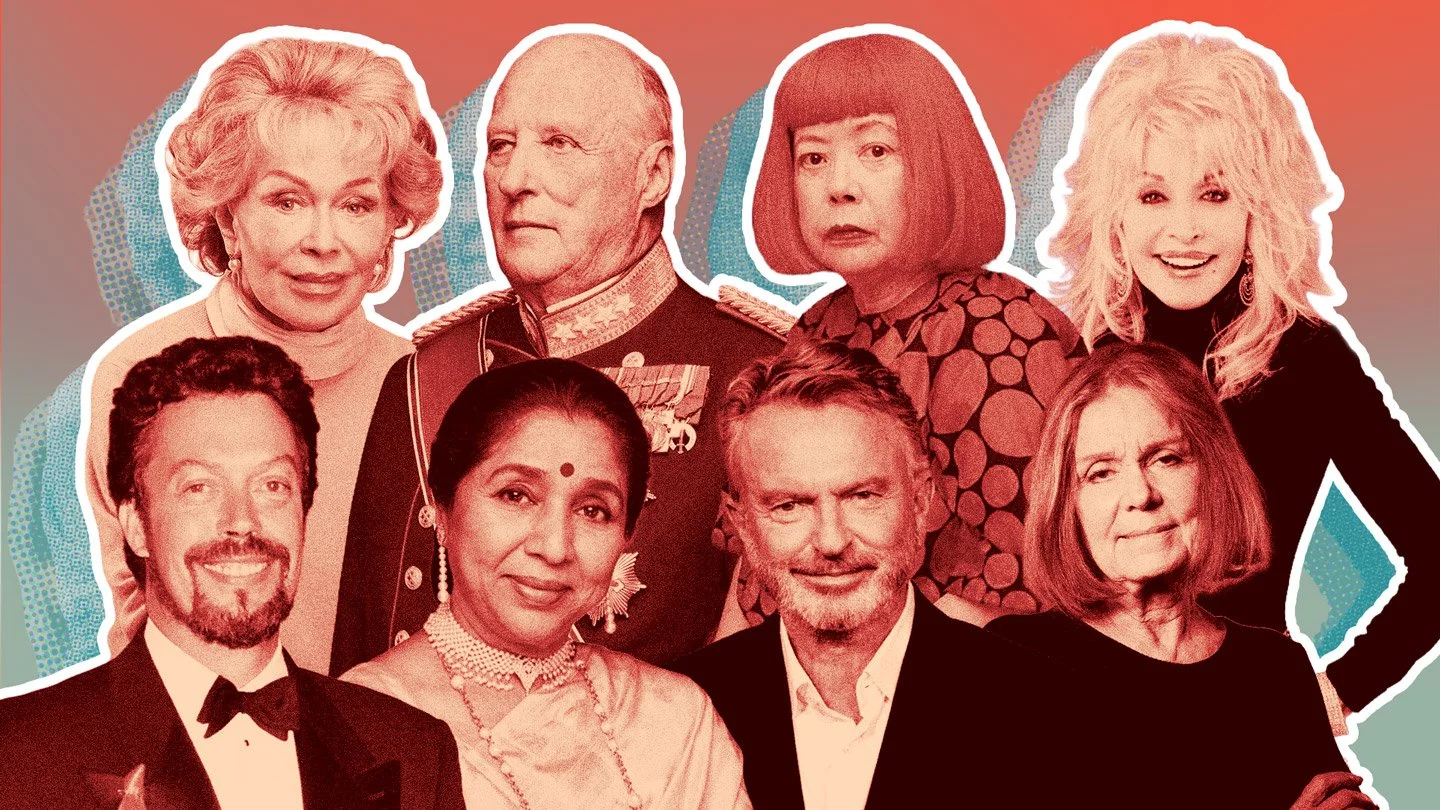
Dolly Parton (1946 - 2026) - Kindness, Creativity, Love of learning
"The way I see it, if you want the rainbow, you got to put up with the rain." A quote that has graced many a motivational poster. But what stays with people, though, is not the optimism but what she did with it. Parton's father couldn't read or write, and rather than let that sit as a private ‘failure’, she turned it into a gift for millions of children through her Imagination Library, which has posted free books to kids around the world so that early literacy wouldn’t be a matter of the birth lottery. She provided scholarships for higher education for employees at Dollywood. She learned from the people around her and paid the lessons forward at scale. She was a passionate and compassionate leader, and like the best leaders she noticed when people around her were struggling - and quietly empowered the change she wanted to see in the world.
Gloria Steinem (1934 - 2026) - Bravery, Fairness, Perspective
Writing in the Los Angeles Times, she reframed second-wave feminism into a single image: "It's not about a piece of the existing pie; there are too many of us for that. It's about baking a new pie." Steinem could have simply built her own successful career and called that a win. Instead she spent six decades trying to change the system for every woman (starting with co-founding Ms. magazine), not just to secure her own place within it. She teaches us that when a fight looks like people competing for a fixed share - a promotion, a budget, a seat at the table - the braver move is often to challenge the size of the pie rather than scramble for your slice of it.
King Harald V of Norway (1937 - 2026) - Fairness, Kindness, Social intelligence
In 2016, with anti-immigrant sentiment hardening across Norway and the political mood narrowing over who was ‘Norwegian,’ Europe's oldest reigning monarch used a palace garden party to insist his country was broad enough to hold everyone - immigrants, believers of every kind, and "girls who love girls, boys who love boys, and boys and girls who love each other." A constitutional monarch holds almost no formal power, so he instead used his influence in combination with social intelligence - a read on what his people needed to hear, and he spent it making citizens who don't always feel they belong feel that they did. Any leader with a platform can learn from this: influence isn't measured by the authority of your title, but by whether you use your voice to make the people around you feel they are a part of something bigger than themselves..
Yayoi Kusama (1929 - 2026) - Perseverance, Creativity, Zest
For Kusama, the making of art was a necessity rather than a choice. The high priestess of polka dots worked through decades of serious mental illness, living by choice near a psychiatric hospital and crossing the street to a studio to paint until her final days, and the private obsession that could have consumed her became mirror rooms that millions of strangers queue to stand inside. Art that inspires and reflects. That creates an awareness in the world. What she shows us is that you don't always have to overcome the thing that challenges you; sometimes the most powerful work comes from channelling it into something only you could make.
Tim Curry (1946 - 2026) - Bravery, Creativity, Resilience
"I like risky parts - abrasive characters the audience won't necessarily like,” Curry to People. He demonstrated this in 1975 with Dr. Frank-N-Furter, the flamboyant, cross-dressing lead of The Rocky Horror Picture Show - a role most actors of the era would have run from. Curry didn't just take it; he committed to it so fully that he turned a risky, unconventional part into a cultural landmark and made the film the enduring cult classic it remains today. By leaning into this bold, distinctive choice, he showed a willingness to grow by stepping outside of his comfort zone and laid the groundwork to thrive against future adversity. When a 2012 stroke left him using a wheelchair and changed how he could work, he didn't retreat but rebuilt his craft around what he still had, becoming one of the great voice actors of his generation. That is resilience in its truest working sense: not gritting your teeth through a setback, reinvention through utilisation of your strengths.
Blanche d'Alpuget (1944 - 2026) - Perspective, Bravery, Love of learning
"I believe in the goodness of life and I also believe in the goodness of death." Blanche spoke about death with a composure most of us can only aspire to. The Australian biographer and novelist built her career on telling the truth about a life in full - her portrait of Bob Hawke was frank and shared his flaws long before she married him - and it's tempting to think the biographer's habit of seeing people through a wide-lens view gave her this perspective. Whether or not that's the source, she faced her own mortality as plainly as she'd once written about others' lives, and leaves us with a reminder that the willingness to see things as they truly are, rather than as we'd prefer them, is its own kind of strength at work and in life.
Sam Neill (1947 - 2026) - Humour, Love, Social intelligence
Facing an aggressive blood cancer, he kept telling stories about himself, including naming his farm animals after famous friends: "Meryl Streep was killed by a ferret recently. I found her as a pile of feathers one day." The Jurassic Park star met a terrifying diagnosis with warmth rather than grim silence, turning his illness years into something his enormous following could sit alongside rather than pity, and underneath the lightness ran real love - for his friends, his Otago vineyard, and the environmental causes he lent his platform to. He teaches us something every leader eventually needs: honesty and humour keep people close through hard times, where a brave face only holds them at arm's length.
Asha Bhosle (1933 - 2026) - Zest, Creativity, Curiosity
Bollywood great, Asha Bhoslel, recorded her first song at ten and her last collaboration at ninety-two, and in between she refused, again and again, to sing only what had already made her famous. One of India's greatest playback singers - the voice behind the actors on screen - Bhosle laid down over 12,000 songs across more than twenty languages, moving between poetic ghazals, full-tilt dance numbers and pop with a restlessness that kept her current across generations. What set her apart was an appetite for the unfamiliar: well into her later decades she was seeking out collaborations with artists far outside her world, from Boy George to the Kronos Quartet to Gorillaz, whose Damon Albarn called her voice his ‘gateway to Bollywood.’ She made her debut as a lead actor at seventy-nine. Paying tribute after her death, actress Priyanka Chopra Jonas said Bhosle's voice had helped "shape the emotional landscape of an entire nation." Her career teaches that curiosity is what keeps a long one alive: she stayed in demand for eight decades through a willingness to keep stepping out of her comfort zone - and adapting for endurance.
The invisible thread
Maya Angelou said it best: "I've learned that people will forget what you said, people will forget what you did, but people will never forget how you made them feel."
That feeling - the empathy, the warmth, the judgement about people - is ours to give, and it's built by leaning into our human strengths.
Did you notice that none of these icons were remembered for being efficient? They were remembered for the bravery to take a risk, the kindness to build something for strangers, the resilience to reinvent after a setback, the social intelligence to be unifying at a fracturing moment, their perseverance in the face of challenges. In each case their strengths were what made them successful. Parton's kindness shone through each of her decisions, Bhosle’s curiosity became an art form, Harald's read on his people became a moment of national belonging.
We don't succeed by flattening ourselves into some efficient average, we succeed by finding the human strengths we already carry and leaning into them. With intentionality. It's worth knowing what yours are. Our Hodie app is built to help you surface your own character strengths, so you can put them to work.
More human goodness you might like: