Human Skills Development: Your secret weapon for Psychological Safety
It is said that prevention is better than a cure.
“Human (soft) skills development is imperative for psychological safety because it directly cultivates the interpersonal trust, emotional intelligence, and communication habits necessary for employees to take risks without fear of punishment or humiliation.” McKinsey
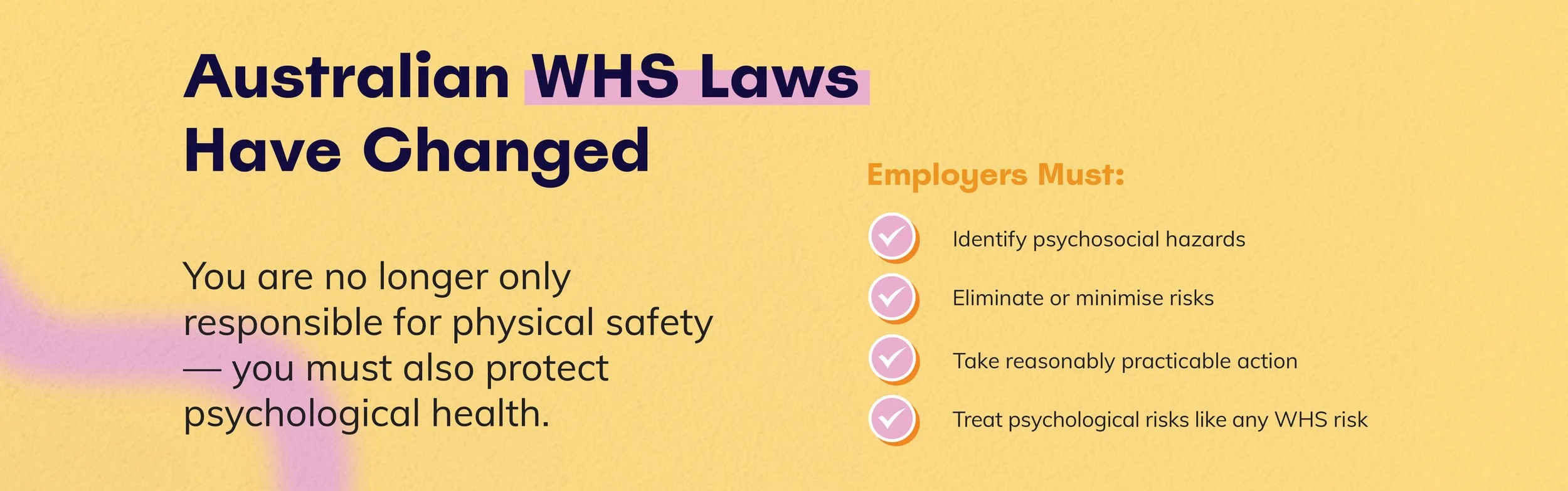
The new psychosocial regulations across Australia are clear: you’re not just expected to keep people physically safe; you’re responsible for protecting their psychological health too.
And the stakes are high.
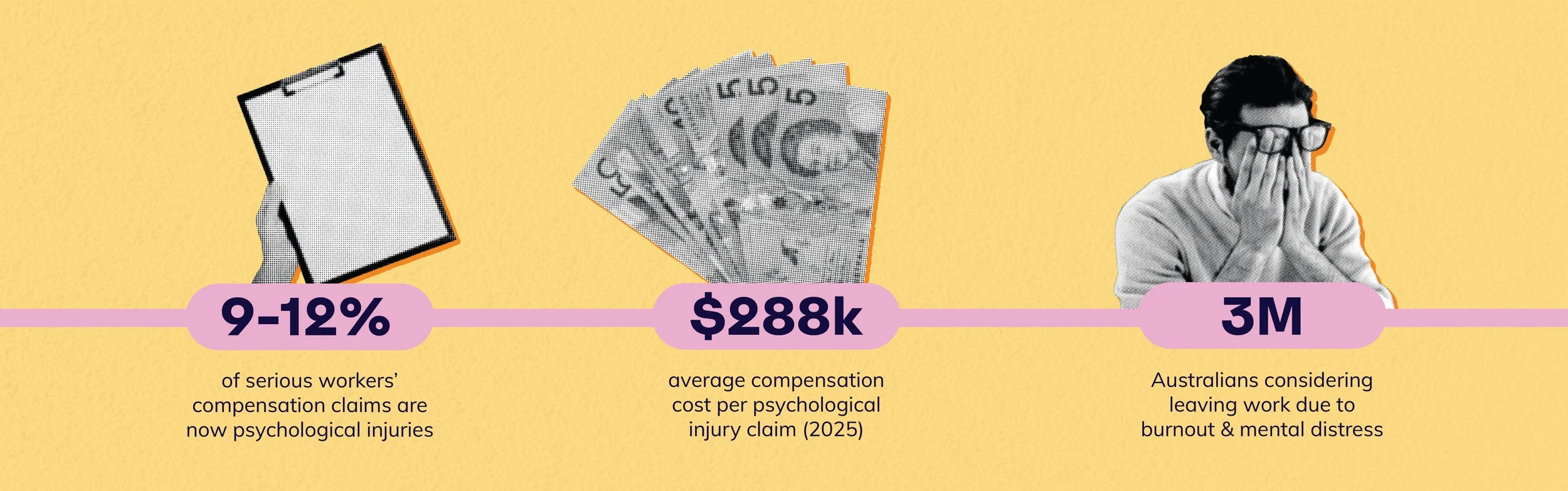
Safe Work Australia’s latest data shows mental health conditions now make up around 9–12% of all serious workers’ compensation claims, with those claims growing by over a third in just a few years. When psychological injuries do occur, the median time off work is almost five times longer, and the compensation bill averaged $288,000 per claim in 2025 - more than four times higher than for physical injuries.
Add to that a recent Allianz report revealing nearly 3 million Australians are considering quitting their job due to burnout and mental distress.
Psychological safety is business-critical. And it starts with Human Skills.
Psychosocial safety: a legal must-have
First, a quick reality check on the legal landscape.
Safe Work Australia has released new WHS Regulations on psychosocial risks and a model Code of Practice: Managing psychosocial hazards at work. These outline expectations that organisations must identify, eliminate or minimise psychosocial hazards as far as reasonably practicable – just like any other WHS risk.
In layman’s terms:
You can no longer treat “stress” as an individual resilience issue.
You must proactively manage the work factors that create psychological harm.
What are psychosocial hazards – really?
Safe Work Australia defines a psychosocial hazard as anything at work that could cause psychological harm, like anxiety, burnout or depression. Common examples include: high or relentless job demands, low role clarity, poor change management, bullying, harassment, lack of support, remote or isolated work, and workplace conflict.
Here’s the key:
These hazards are not always visible to the eye. They live in conversations, decisions, emails, “jokes”, 1:1s, performance reviews, restructures, meeting cadences and Slack messages at 10.30pm.
You can redesign roles and add resources – and often you should – but how leaders show up day-to-day is what determines whether people experience their job as challenging and meaningful… or unsafe and overwhelming.
Human skills as your strongest control measures
When regulators talk about controlling psychosocial risks, they’re asking:
“Have you done what is reasonably practicable to prevent psychological harm?”
Yes, that includes structural fixes (workload, staffing, job design). But the most visible controls in your people’s day-to-day experience are human – the skills, habits and mindsets of leaders and teams.
1. Emotional intelligence & self-awareness
High performance today comes from the conditions behind the numbers – engagement, wellbeing, resilience and psychological safety.
Leaders with strong emotional intelligence can:
Notice their own stress and avoid “spilling” it onto others.
Recognise early warning signs of burnout or withdrawal.
Adapt their style to different personalities and pressures.
That might look like pausing before firing off a frustrated email, checking in with a quiet team member after a big change, or being honest about their own limits instead of pushing everything downhill. These small, human moments directly reduce hazards like high work pressure, poor support and role confusion.
2. Communication, context and storytelling
A huge proportion of psychosocial risk traces back to poor communication: people not understanding what’s expected, feeling left behind during change, or second-guessing what’s really going on.
Ask yourself: is your team ‘Resistant to Change’? Or are they starving for context? Dropping big decisions without explaining the why, is going to have teams feeling like they’re purposely being kept in the dark, resulting in lower productivity and engagement.
Human skills training helps leaders to:
Explain “why this, why now, why us”, not just “what to do”.
Translate strategy into real-life impact (“here’s what this means for your day and your workload”).
Use simple, human language instead of jargon that fuels anxiety.
Repeat key messages enough times – and in enough ways – to resonate.
Clarity and context don’t just feel nicer. They actively reduce hazards like poor change management, low role clarity and job insecurity.
3. Empathy, listening and servant leadership
Psychosocial hazards such as bullying, exclusion and lack of support are often less about “bad people” and more about under-skilled people in high pressure.
Servant leadership – where leaders prioritise the growth, wellbeing and psychological safety of others – is emerging as a must-have set of capabilities: empathy, active listening, coaching and empowering others.
When leaders practise servant leadership, they:
Create space for people to raise workload, conflict or wellbeing issues early.
Respond to distress with curiosity and support, not judgement.
Role-model respect and inclusion, setting the bar for what’s acceptable.
4. Collaboration and constructive conflict
Unresolved conflict, “us vs them” mentalities and siloed working all show up as psychosocial hazards over time.
Our MaxInUs strengths approach helps teams understand how different strengths and derailers interact – and how to have more effective, respectful conversations when things get tough.
With the right human skills, teams can:
Disagree without disrespect.
Give and receive feedback safely.
Solve problems together, not against each other.
The result? Less simmering tension and more psychologically safe, high-performing teams.
So what can you do?
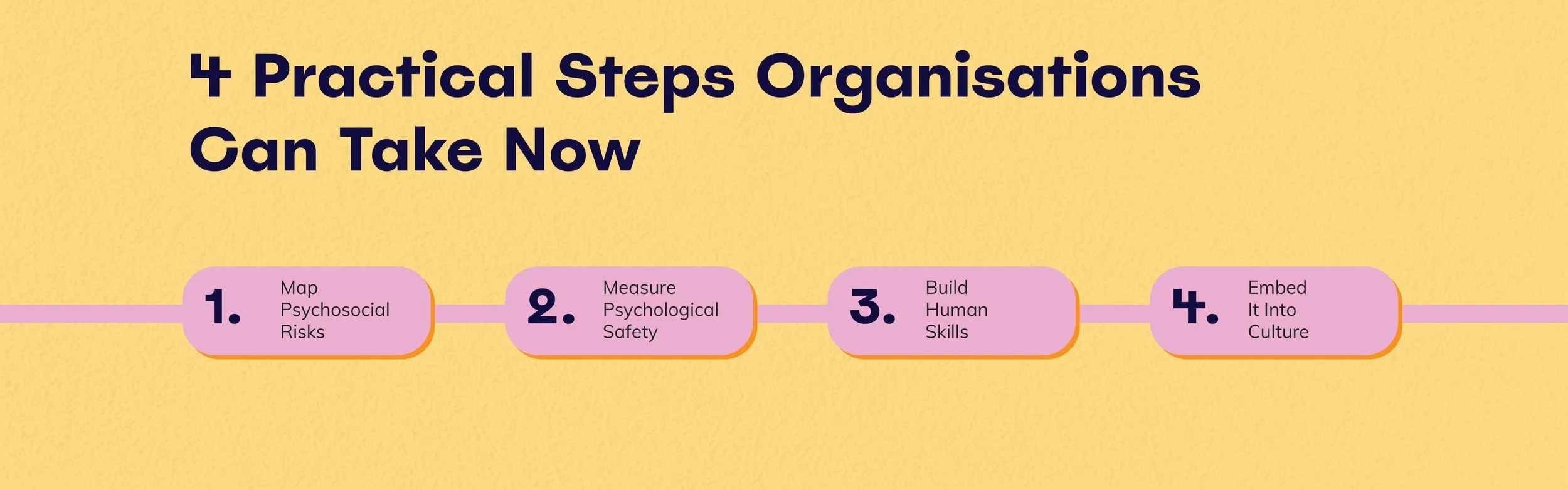
If you’re a leader, HR/WHS professional or business owner, here are practical steps you can take now:
1. Map your psychosocial risks with your people
Use tools informed by Safe Work Australia and Comcare to understand where risk lives in your organisation: high job demands, poor change communication, low support, conflict.
2. Make psychological safety a core leadership metric.
Engagement, wellbeing and psychological safety are now recognised performance multipliers – not ‘nice-to-haves.’ Build them into leadership reviews, development plans and performance conversations.
3. Build human skills into your L&D Calendar - don’t let it get dusty on your WHS shelf.
Human skills training is a tangible control measure. Programs that develop self-awareness, empathy, communication, conflict skills and servant leadership directly reduce exposure to psychosocial hazards. Our Human Skills for Organisations suite is designed with this in mind – from foundational EQ and strengths discovery to leadership workshops focused on psychological safety and servant leadership.
Psychosocial safety is here to stay.
Human skills will decide whether it becomes your biggest risk – or your greatest advantage.
If you’re ready to move from “we know we should do something about psychosocial hazards” to “we are doing something – and it’s working”, we’d love to partner with you.
Explore our human skills and leadership programs, or reach out to co-design a program that supports your WHS obligations and your people. Because at Maxme, we believe Success is Human.
More human goodness you might like: