The AI panic is real but it’s also misunderstood
These days, whenever you open LinkedIn, there’s one thing you’ll see everywhere: reports saying “AI is changing the job market.” You read a few of them, and go in a state of frenzy (mostly). You pick up your phone, call a few friends and talk it through. The conversation mostly surrounds, What if I’m next? What does this mean for my future? How do we make ourselves or even our universities, schools and teachers AI-proof?
It’s a very real reaction. And honestly, a very human one.
But what do we miss while consuming these reports?
Firstly, the ‘last’ thing we should do is PANIC. Technology will evolve, it always has and it always will. Yes, AI is here, it will automate certain roles, organisations will look at efficiency. But that’s only one side of the story.
Interestingly, this very thought was reinforced in a recent PwC report. According to their 2025 Global AI Jobs Barometer, skills in AI-exposed roles are evolving 66% faster (up from 25% last year).
This shift is increasing the value of human strengths, such as critical thinking, creativity, strategic judgement and problem-solving. This is where things get interesting. Because while many of us are consuming headlines and reacting to them, we often miss what lies beneath them.
AI will exist but it won’t work alone
AI needs a master. It can’t perform till someone gives a command or asks it to perform something. It might inevitably take over certain tasks, but it’s also true that AI isn't successful everywhere. And even where it is, it doesn’t work in isolation. It needs humans to guide it, interpret it and make decisions around it. In fact, CNBC says, about two-thirds of jobs include tasks that AI can do but there’s no posted role yet AI can do ‘completely on its own’.
So, does this mean we have been fretting over nothing? Perhaps yes, perhaps no. The question is not whether humans will be needed. The real question is, which humans will be needed?
So you see, while you can take a breather on the undying need for humans, which ‘human’ will remain AI-proof is still in question. Yes, humans in flesh and blood, of course. But more importantly, it will be those who bring intrinsic human qualities and skills that truly define us, yet are not naturally developed in most of us. Skills like judgement, critical thinking, communication, empathy and more.
These are the very skills that set us apart from machines. And yet, they don’t just exist by default but need to be taught, practised, and strengthened. Simply being human does not guarantee that we possess them.
And this is where a larger, more persistent challenge begins to show up across systems.
We see it in high attrition rates within companies.
We see it in teachers feeling disengaged.
We see it in graduates struggling not just to land jobs, but to sustain them.
At the core of all these issues is a common thread: the lack of structured development in essential human skills. For too long, we’ve taken these skills for granted. We assumed they would come naturally with time or experience.
Educated, yet unemployable: India’s silent crisis
If you look at it closely, especially in India, the issue isn’t the education system itself.
Our curricula are strong
Universities are globally ranked
Students from across the world come to India
And yet, something doesn’t add up. There are reports suggesting that a large percentage of graduates struggle to be employable. In fact, some estimates put the unemployment rate among engineering graduates at 83%. If education standards are strong, then what’s missing?
It’s the ability to apply that knowledge in real-world contexts.
This is where Maxme comes in
Before we talk about what makes Maxme reliable, it’s important to look at how our journey has evolved. Maxme started just a few years ago. Yet, the pace at which it is gaining visibility, trust and relevance reflects the strength of the problem we are solving and the clarity of our point of view.
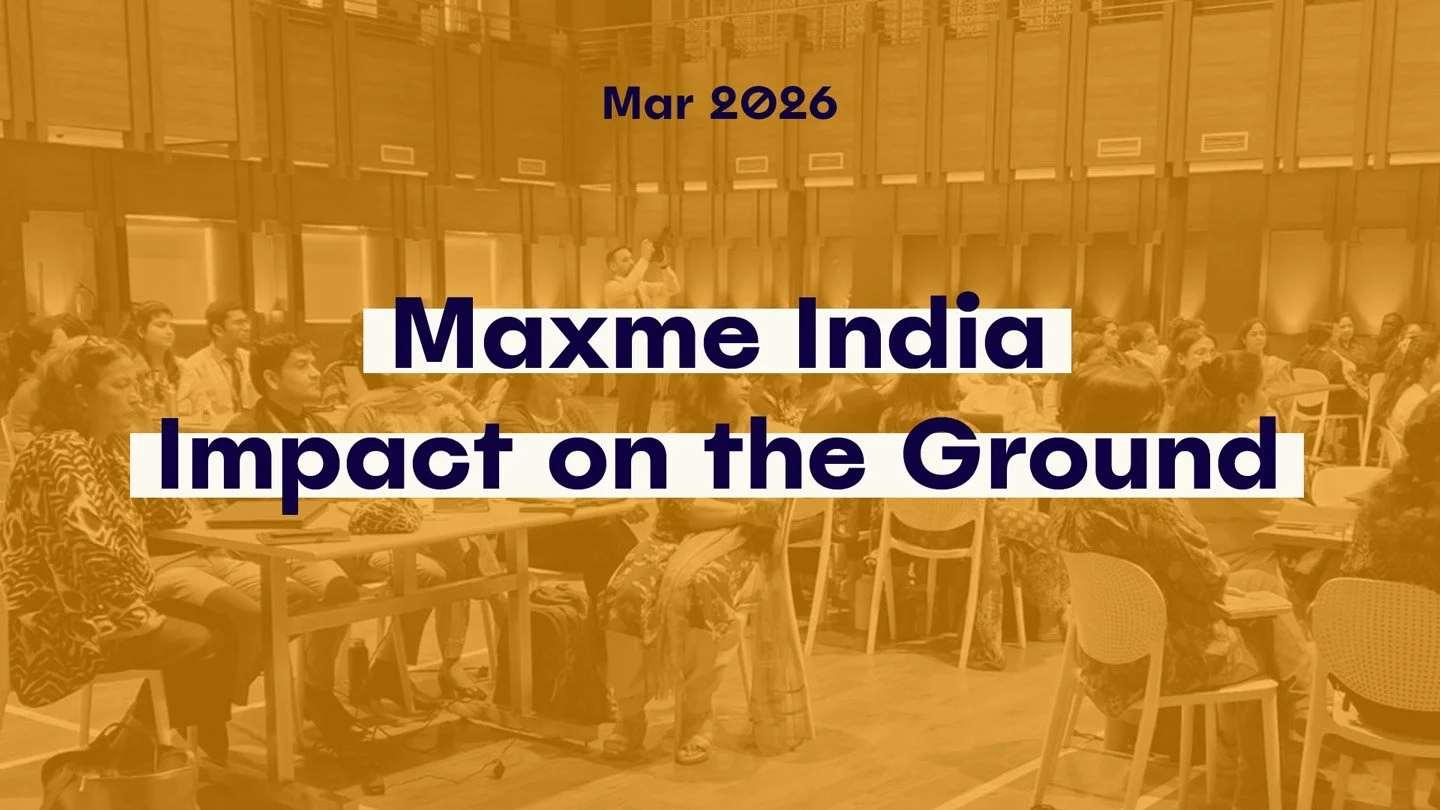
Today, Maxme is already working with leading institutions such as DPS Gurgaon, Dhirubhai Ambani University, Ramaiah Academy, REVA University, GD Goenka, Nirma University and more. These are signals that we are building in the right direction.
What is even more telling is how people are beginning to discover and engage with us across platforms.
So.. what now?
We have now spoken at length about the uncertain times we are living in. But uncertainty is not new to us; we humans are masters at navigating it. The real challenge is that much of our ability stays hidden, untapped beneath the surface, just like an iceberg, where what we see is only a small part of what’s truly there, but beneath it lies far more strength and potential than we realise.
Maxme exists to bring that hidden part to the surface, helping individuals access, develop, and apply the skills they already carry, so they can truly operate at their full potential.
Let’s make the hidden 90% impossible to ignore.
More human goodness you might like: